
Three Ways to Outsource a Weakness
Lewis and Clark, Calvin and Hobbes, and a six-role AI marketing team walk into a problem.
A colleague asked me if I would mentor one of their employees in project management skills. I was about to stuff my face with a donut, so I had to snap to attention with professionalism. Upon learning who exactly needed mentoring, my first thought was, “eek, challenging.” I know him and know him to be a fantastic storyteller. When I hear him go on and on during a meeting, I’m both transfixed and annoyed. Project management is definitely not his strong suit, hence the ask.
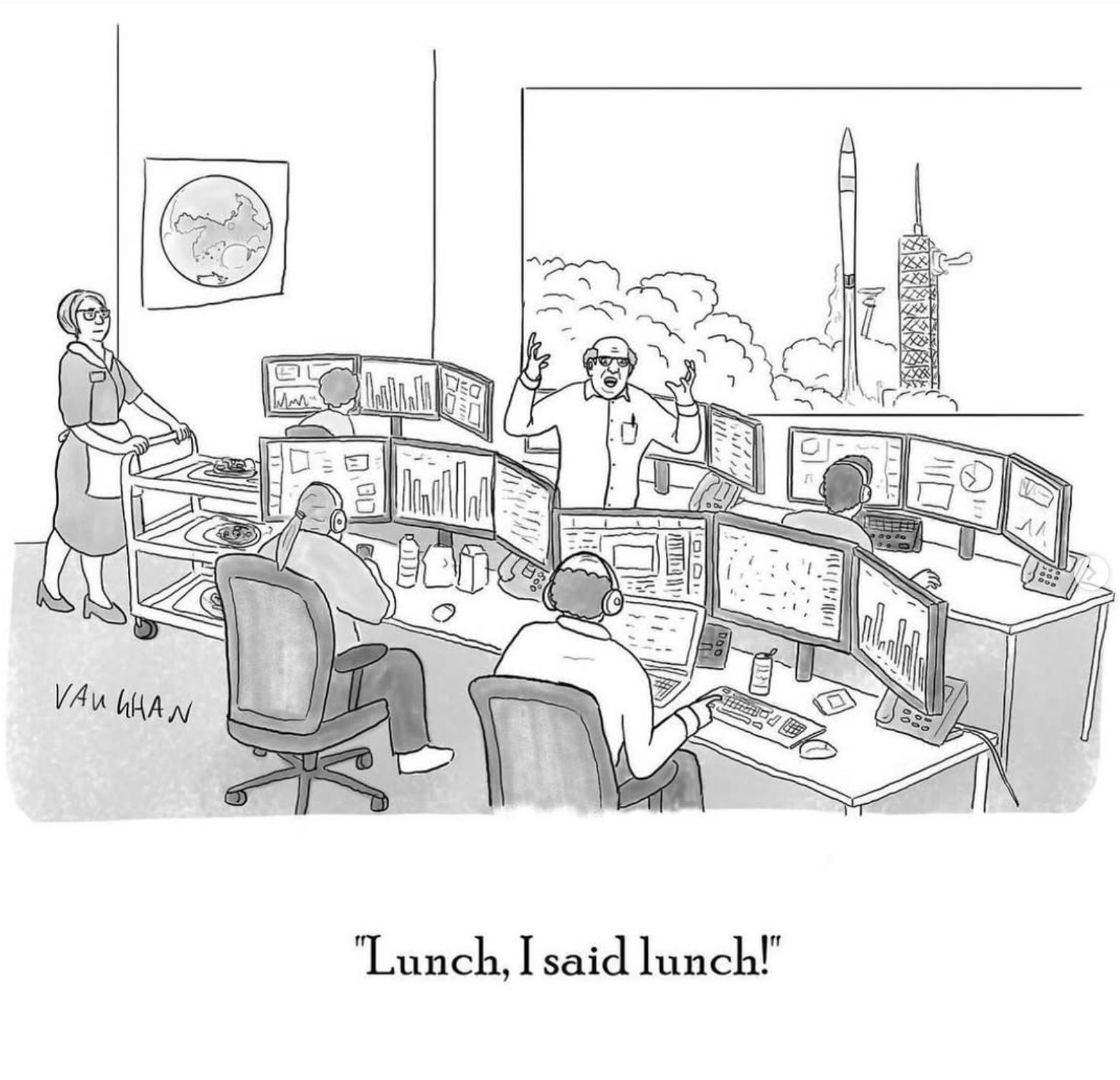
Now, what I realize is that humans have been doing this for a very long time - leveraging one person’s expertise to help another. That’s actually how we’ve used this cultural technology to achieve the greatest wonders. Pyramid builders did it by having dedicated scribes, foremen, work-gang rotations, etc. The latest NASA Artemis mission did it by not only having engineers, schedulers, safety specialists, but also city planners, organizational psychologists, and every other skillset you can imagine.
The problem that arises is when a person who’s good at one thing is expected to be good at another.
Imagine working on the pyramids and being expected to be a scribe when you don’t know how to read or write. Or being a NASA engineer who’s expected to be an organizational psychologist.
My default mentoring advice would be to learn the fundamentals of project management and the three core disciplines of scope, schedule, and budget, and how they interplay. Numerous resources exist, and it would be just a matter of setting aside time and then applying it in practice.
Nah. Instead, I say, protect your strengths and find a prosthetic for your weakness. The goal isn’t to master a new skill - a skill he probably isn’t going to be good at, no matter how much time and resources he invests - but to find a way to not let it hold him back.
The real coaching cue is, what are the options out there?
The oldest trick is to simply use another person. Find a person who’s good at the thing you’re not good at, and become besties. The grown-up term is to become partners. A symbiotic partnership: you both benefit from what the other brings. Think Lewis and Clark, Tina Fey and Amy Poehler, or my personal favorites, Calvin and Hobbes.
The next trick is to borrow a structure. Think along the lines of templates, where the skill has been decomposed and distilled into a predetermined format. Or think of rituals and routines, like morning prayers and evening routines. You know what to do because it’s the same process every day. Find a process and make it a habit.
The last idea is to use an object that you can’t ignore. Imagine a whiteboard in your office with the project’s tasks listed. Or sticky notes around your monitor. The key is to get it all out of your head and down somewhere that’s hard to look past. Externalize the knowledge. Philosophers Clark and Chalmers dubbed this the ‘extended mind’ — the idea that a notebook in your pocket can be just as much a part of your brain.
These days, AI is the game-changer that can be every skill that you don’t have. I currently have one AI chat going on where I’ve assigned it six different roles that comprise a marketing team. Led by the Creative Director, the team consists of a Copywriter & Content Creator, Web & Visual Designer, Growth & Distribution Strategist, Content Strategist & Editor, and a Community & Engagement Lead. I prompt it to debate as a “team” before providing me with a response. AI collapses all three into one: it’s the partner, the borrowed structure, and the artifact you can’t ignore — all at once.
When I meet with the mentee, my initial reaction — eek — will be gone, replaced with curiosity about how to solve the case of his missing prosthetic. As a storyteller, he’ll love the mystery. He can keep being Sherlock, but he’ll have to find his Watson… or program one.
TRY THIS
Name a weakness, be honest. Pick one prosthetic — a person, a structure, an object, or AI — and build it this week. Notice whether the weakness still holds you back.
POSITIVE AFFIRMATION
“Today my daughter woke up playful. My other daughter woke up determined. My wife woke up with a mission. Together, we can lean on each other.”
- from my AffirmStreak this morning
Interesting point of view