
The Usual
Two books, two authors, and what ordering "the usual" reveals about being stuck.
This year I gave myself permission to pick books in a different way. It used to be a list full of other people’s top 20 books—The New York Times, Obama, productivity gurus—like picking food from a preselected menu. This year, though, I decided to go deeper into the source material of my favorite authors and deep into specific domains. And with that small move, I became a kid in a restaurant allowed to choose anything from the menu. The choices seemed endless.
Today, I’d like to discuss two books I finished recently: Chip Huyen’s AI Engineering and Ezra Klein’s Why We’re Polarized.


In AI Engineering, Huyen methodically walked through, step by step, what it would take to implement AI into any situation. This book runs over 500 pages because it discusses literally hundreds of ways to tweak, adjust, manipulate, understand, judge, evaluate, and choose AI models. If there’s a way to do something to AI models, then chances are someone has already thought of it and written a paper about it, including Frankenstein models. There’s zero chance I’ll remember all the technical jargon—heck, she could’ve made up terms and studies for all I know! But by being exposed to this deeper world of AI engineering, the next time I encounter them in my day job or in conversation, I’ll at least be able to chew on it some.
In contrast, Why We’re Polarized felt like we spent hours and hours talking about the same topic. At some point, you want the conversation to move on, or at least hope the ending offers a bit of a climax, but neither came. Same thesis, attacked from multiple angles, all arriving at the same predetermined destination—that we are polarized. It’s like me walking into Chipotle and ordering my usual—burrito, fajita, white rice, barbacoa, black beans, corn salsa, and lettuce. There’s a whole menu to explore, but Klein chose to narrow in on the usual without much consideration for anything else, including the guac.
Now, it occurs to me—as I try to absorb Huyen’s lessons on AI engineering—is there such a thing as too many options? Clearly, when you’re dealing with billion-dollar technologies, there will be no shortage of creative solutions to eke out any minuscule amount of increased performance. But that’s a slippery slope, isn’t it? In the pursuit of trying to perfect the technology, you could get lost in it and never arrive at a concrete solution. Take my Chipotle example, with its finite menu that never really changes. In this case, it’s like being seated at a booth at Cheesecake Factory, and the 20-page menu overwhelms you.
I will say, despite Klein’s singular focus on proving his thesis, I appreciate his dedication. Here’s a man who believes what he’s saying so much that he’s amassed an army of evidence to prove it. He’s picked a side, and he’s doing something about it. As a reader, I would’ve liked to have been involved in more of the thought process, rather than just arriving. But then, Huyen involves you in every possible detail worth mentioning about engineering AI—from the hardware chips and how much heat they produce to Billboard-like rankings of the top models of the day. A part of me wanted the reduced menu, where I’d trust Huyen to have already discarded some ideas and present me with only the no-kidding, these-are-the-techniques-you-gotta-know list.
This is the point where I realize I want both: to have my cake and eat it too. I like to pick, commit, and go as hard as I can—but I also reflect, at some point. Klein goes hard; Huyen is total reflection; I want both.
And that’s the problem with my ordering my usual burrito at Chipotle. The burrito isn’t the problem—it’s yummy and full of protein. No, the problem is I’ve stopped pausing before my order to consider the rest of the limited menu. Same at Cheesecake Factory: I overcame the paralysis-by-analysis of that menu by always ordering the jambalaya. Also yummy. That’s the problem with Klein’s Why We’re Polarized: it didn’t feel like he paused to consider his options. Even his conclusion lands on a whimper—essentially, if you came for a grand solution, he’s not offering one. And the problem with Huyen’s AI Engineering is that the entire 500-page book felt like a pause. C’mon, just get on with it.
Taking a cue from habit-formation theory, it’s the environment that triggers the habitual behavior. According to Wendy Wood’s research on habit formation—specifically, context-response associations—it all starts with the environment. Walk into Chipotle, see the same lobby, the same menu, the same line at the counter, and the burrito order runs on autopilot. But say Chipotle had a food truck, and I saw it parked outside my office building. I think I might have to reread the menu before I lock in my order. The point is, if you’re stuck, don’t rely on willpower or a gimmicky mental model to overcome it—change your environment so the cue never hits. The novelty, the newness, the I’ve-never-been-here feeling is what makes a person pause and think in fresh terms. Klein teased this concept in his conclusion, too, recommending that a person change their source of news and information for more variety and, in time, perhaps become less polarized.
In the end, would I recommend the two books? Considering they’re niche and you sorta know what you’re getting yourself into, I’d have to say yes. They each deliver on what they set out to do. You can only blame yourself for having an interest in these topics to begin with. A funny thought occurs to me: what would it be like to have dinner with Klein and Huyen? I imagine Klein eating his usual but not happy with it, and I’d wonder: why do you keep ordering the same thing? Huyen would be lost, still deep in the menu, not having ordered yet. And I’d be there, seated between them, eager to make conversation!
POSITIVE AFFIRMATION
“Take a breathe and look outside. Beyond the computer screen is so much.”
- from my AffirmStreak this morning
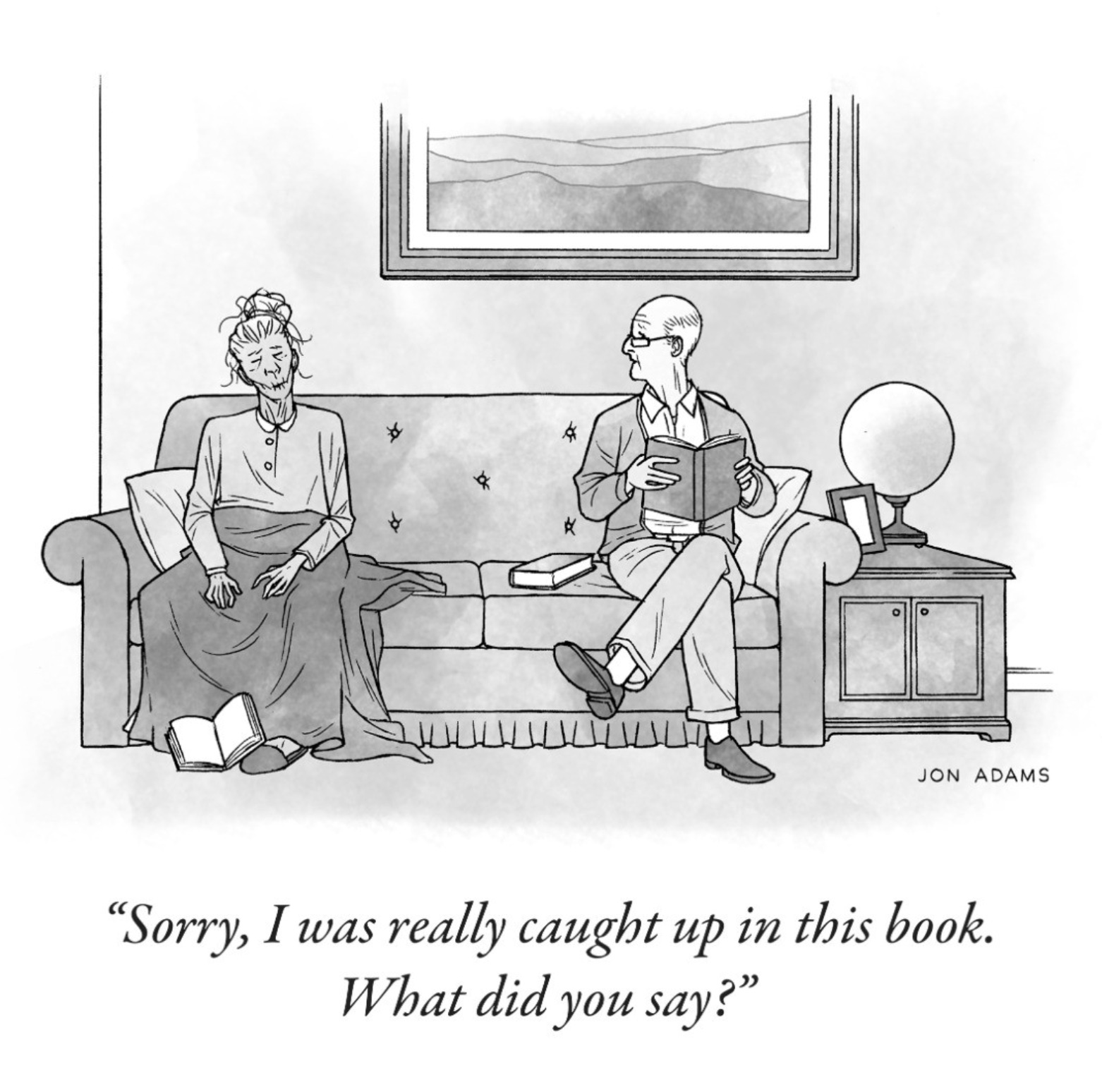
Interesting point of view