
Faked Out
Safety and AI safety aren't far apart. The gap was between me and the version of me I'd been advertising.
Sit back and crack the proverbial knuckles. In this case, don’t lean back too far on the kitchen barstool — the app I’m vibe-coding is compiling the latest production version. Just fixed a few bugs, added a feature a beta tester wanted, and once it’s done I’ll push it to the App Store and Google Play. I’ve turned what used to be a game my friends and I tracked on a spreadsheet into a mobile app, and in doing so I learned all kinds of things: hosting data on Firebase, what GitHub actually does, and, of course, using Claude Code to build the app, the websites, the analytics dashboards. It feels like I’m arriving at something.
Over the last couple of years, I’ve been on a quest. What started as a challenge to learn something new blossomed into a way to pivot my entire career. I picked AI because, well, everybody was talking about it. So I consumed AI books, took a hands-on course, and looked for ways to lead AI adoption in my organization. I’ve worked in safety for over a decade, and I thought, what a perfect overlap — AI safety. I laid out a new career development plan to take me to that next level. One of the steps was applying for the Technical AI Safety cohort by Blue Dot, which aims to “help people build careers and organizations that positively impact the trajectory of AI.” And so I submitted my application, to one day be an alum alongside people from Anthropic, OpenAI, DeepMind, and more.
While I waited for Blue Dot’s response, the trajectory I’d laid out felt steady. I kept spurring on AI topics at work, asking things like, “what’s the trust framework?” My mobile app inched closer to finishing beta while I fixed the bugs testers found. One friend even joked that when I said “I’ve been doing a lot of fixes,” I really meant “AI’ve been doing…” One evening another buddy came over to catch up, the two of us on the sofa, drinks in hand. He asked about the code, the architecture, how I got it to run on both iOS and Android. In that split second, I didn’t have the words. I sorta knew — I at least had an educated guess how AI had coded it — so I bumbled through, something about the code accounting for both platforms and the compiler producing the right app for each store. I made a mental note to learn that better, along with so many other things. All the while, every few days, I remembered I was still waiting on Blue Dot, and I checked my inbox, and then my junk folder, just in case.
Then one day, a few months later, an email from Blue Dot. “After careful review, we’re not able to offer you a place in this round.” It was one of many I was scrolling between meetings at work. I kept reading. “We’re unable to provide individual feedback or reconsider decisions, but we’ve written up general feedback in this blog post.” I read the blog post. The reasons included a lack of technical readiness, not enough demonstrated commitment to making AI safer, and no impressive or relevant experience.
Lack of technical readiness — sure. When my friend asked me to explain the stack behind my own app, how the same code compiled and ran on both iOS and Android, I couldn’t answer. Commitment to AI safety — does poking at it at work a few times count? Impressive experience — I guess vibe-coding, a few books, and an online certificate don’t quite cut it. Turns out the story I’d been telling myself got ahead of me.
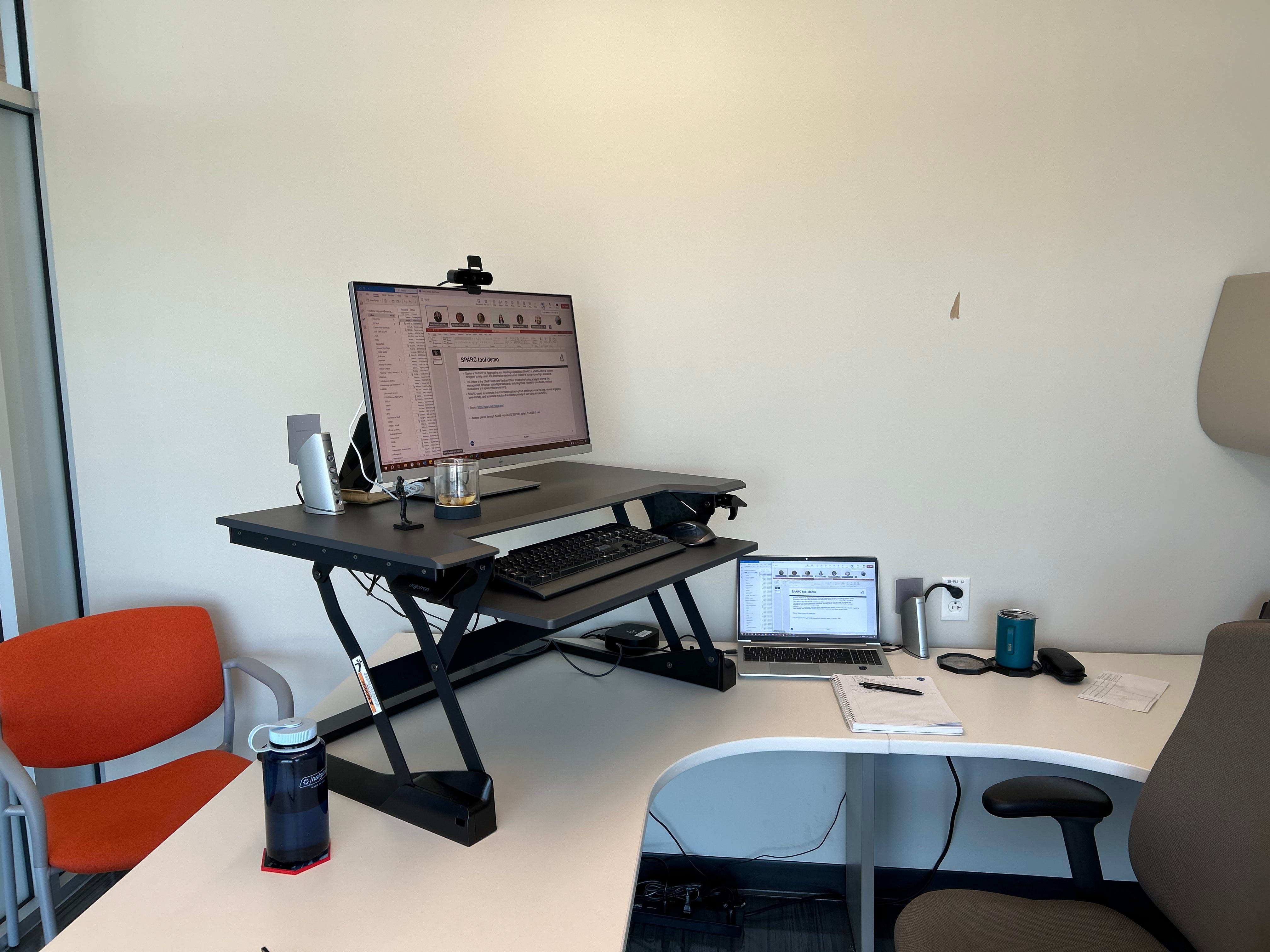
Later, with more time at my desk, I reread the email. I was slouched back in my office chair — whether from the late hour or the weight of the thing, I couldn’t tell. I’m pivoting from safety and risk to AI safety and AI risk, I thought. Credentialing myself as I went. The distance between those two fields isn’t that far, is it? No. It wasn’t the distance. It’s that I’d faked it so well I’d faked myself out. I’d believed I was further along the quest than I was, and I’d latched onto that new picture of myself. Blue Dot, reading my application, caught what I’d gone blind to. I signed a bit I think, but then went on to some of the new emails that needed attention.
The trajectory holds. The path is still good — what I’m doing, what I’m learning, how I put myself into the conversation. The catch is the moment I start believing I’m more than I am. The moment I feel the grip go tight. And you — if I bumped into you, would I find you holding onto anything?
POSITIVE AFFIRMATION
“There are infinite possibilities of ourselves.
Today I am the version I want to be.”
- from my AffirmStreak this morning
Great perspective about AI