
Auto Start-Stop
I track everything. I still can't answer one question.
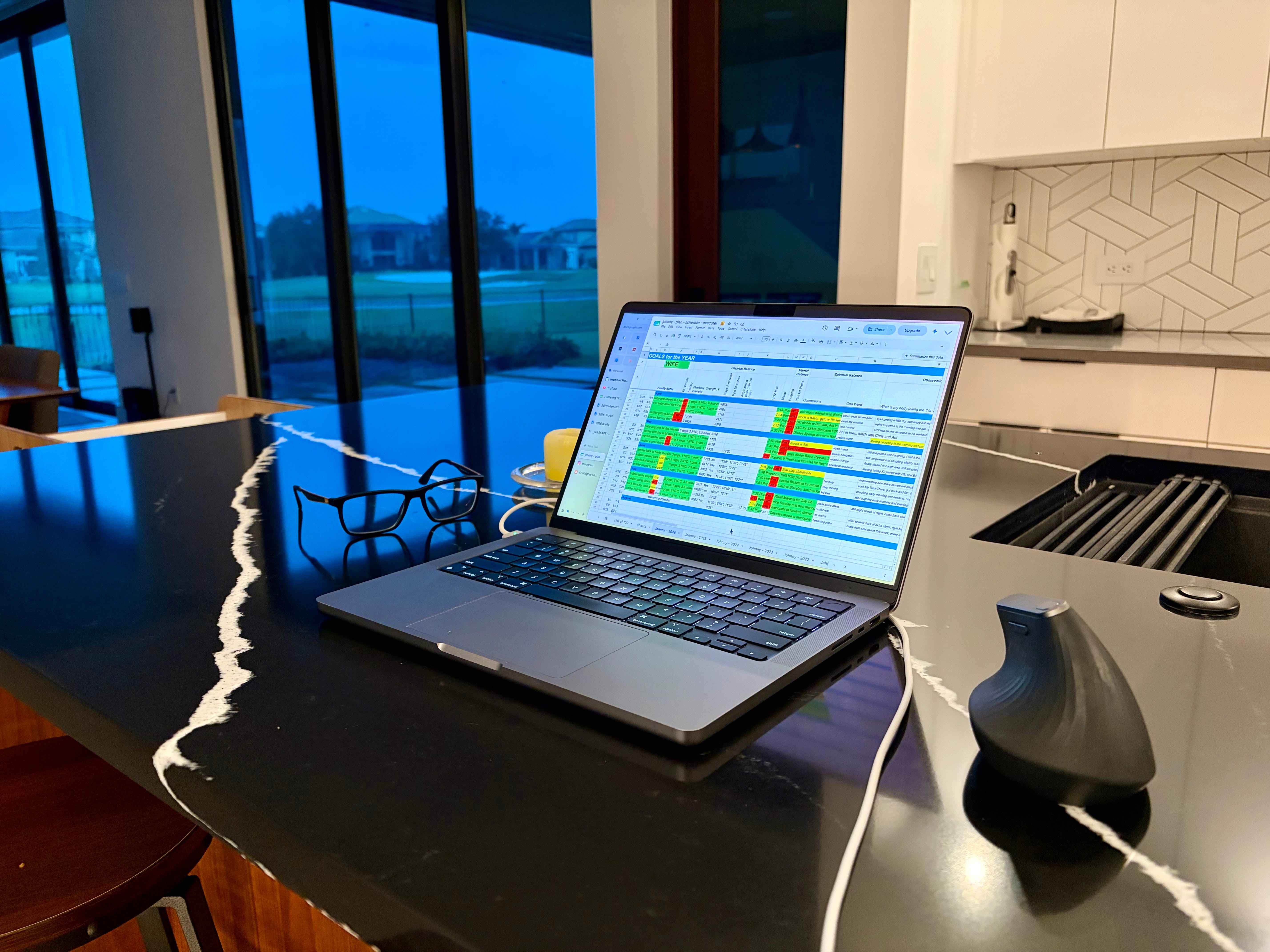
Sunday is the best day of the week. For me, that’s because Sunday is when I fill out my spreadsheet tracking my goals for the year with last week’s accomplishments. I’ve been tracking on this same spreadsheet for over eight years, adjusting each year to what I feel needs tracking. And so, I sit on a barstool at my kitchen counter, lights on low since it’s only 6 a.m. and the kids are still asleep, filling out one cell at a time. Looking over the previous couple of weeks, I see a spike in the data. Over 10,000 steps average per day, increased social time, but fewer family activities! That’s, of course, because I was on a guys’ trip in Iceland that my wife endorsed. It was on that trip I came to a realization—reaching for my phone doesn’t ruin rest, it’s the anticipation of interruptions that ruins it.
It makes sense that for a body to come to rest, it has to come to a complete stop. Think of our modern cars these days. When it comes to a complete stop at a red light, most cars’ engines turn off completely, and start back up as soon as you let off the brake. But if you don’t, if you keep the car rolling, the engine doesn’t shut off. It doesn’t rest or save energy. This auto start-stop system isn’t a complete win, though. The losers are the battery and the starter, which now have more responsibility since they must be more reliable.
But nowhere in my spreadsheet am I tracking my auto start-stop system. Nowhere in it does it say I’ve come to a complete rest before starting back up. And nowhere does it say when I do get to rest, where that responsibility gets shifted to. It measures on multiple axes like family, physical activity, social connections, but it’s missing one baseline measurement that matters—am I rested? Instead, the spreadsheet tells me about a yearly declining running pace and increased bouts of sickness, which I’ve normalized and excused due to age and having young kids.
Here we are in the modern era, where we measure everything. Look at anybody’s hand and chances are they’re wearing an Apple Watch, a Fitbit, a Whoop, or an Oura ring. I’m waiting to see someone collect all of them and wear them like the infinity stones. And I’d venture not one of them can really answer the question—do you feel rested? Sure, we measure sleep quality and heart rate, but what about the number of interruptions? We measure screen time (mine’s three hours a day) and how many times we pick up our phones (mine’s 60 times a day), but can it measure coming to a full and complete stop, and the duration of rest?
I understand not many people want to track their data in a spreadsheet for almost a decade. But I know I’m not going to stop. So I sit here in my kitchen, bummed that out of all the data I do have, none of it helps me answer the question I want answered. Obviously, the answer is to track more data.
So, I click away in my spreadsheet, adding a few more columns. But I need a before and after. Like on the guys’ trip, the before was at home with anticipation of interruptions, and the after was in Iceland with no possibility of interruptions and responsibility shifted to my wife. Where can I go that has no possibility of interruption and where my wife has to take it on? Most guys would say the garage, but I decide on Starbucks. Some mornings I’ll be at home where the possibility of interruption from a crying baby or waking child always looms large. Other mornings, I’ll have to escape on a bike ride while it’s still dark outside to a just-opening Starbucks, and be the only one in there as the staff is still setting up for the day.
In a few months, with a carefully crafted experiment on myself, I should be able to prove my hypothesis—that the anticipation of interruptions is what ruins rest, not the interruption itself. The answer might validate the case for Iceland, or it might mean I’m so far gone that I’m just making up excuses. The answer might also reveal that my rest comes at the expense of someone else’s.
POSITIVE AFFIRMATION
“Treat today like an experiment. Make a guess at how it’ll go, why, and your method. Then by the end of the day, let’s see what happens.
Today I might discover a better way to living.”
- from my AffirmStreak this morning
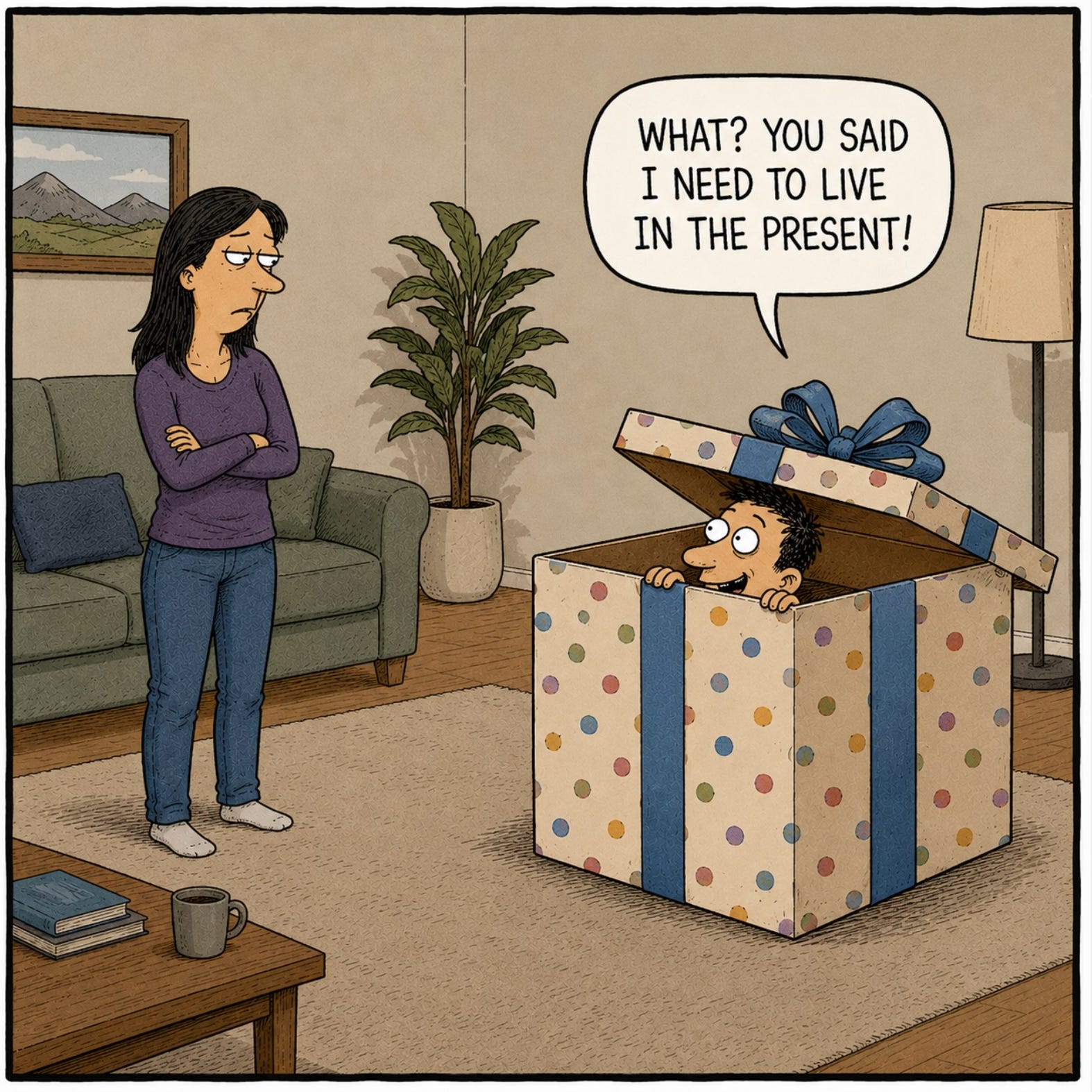
Interesting point of view how to track your life